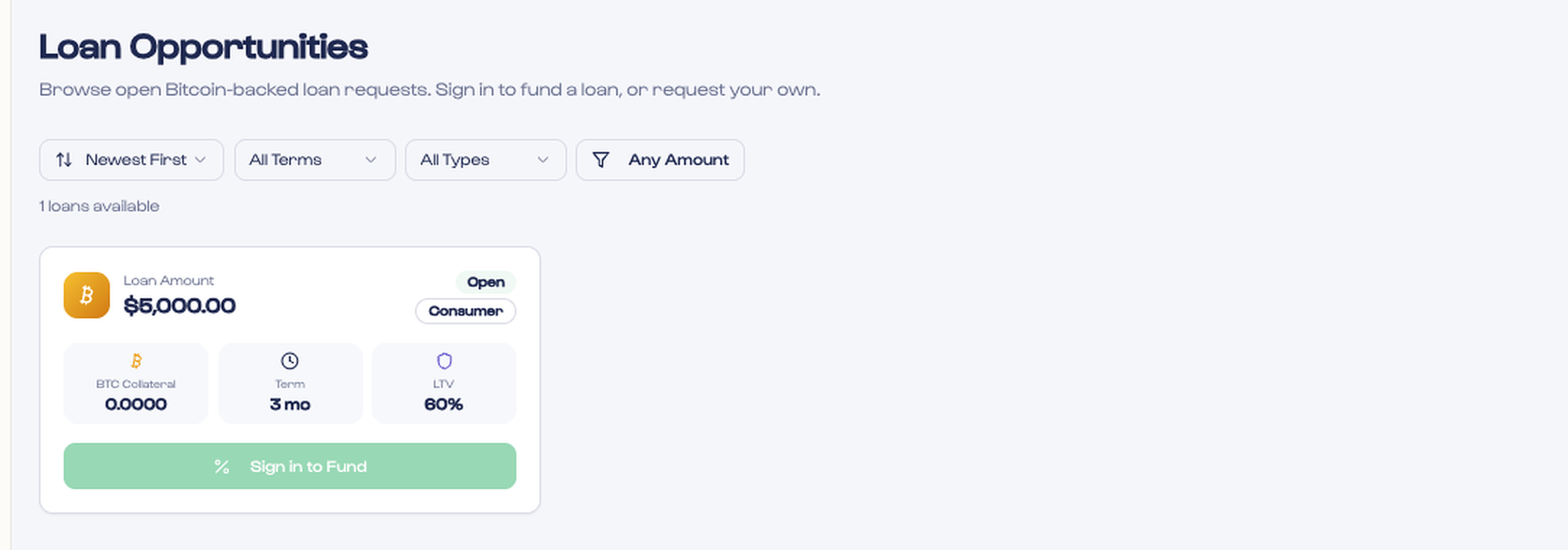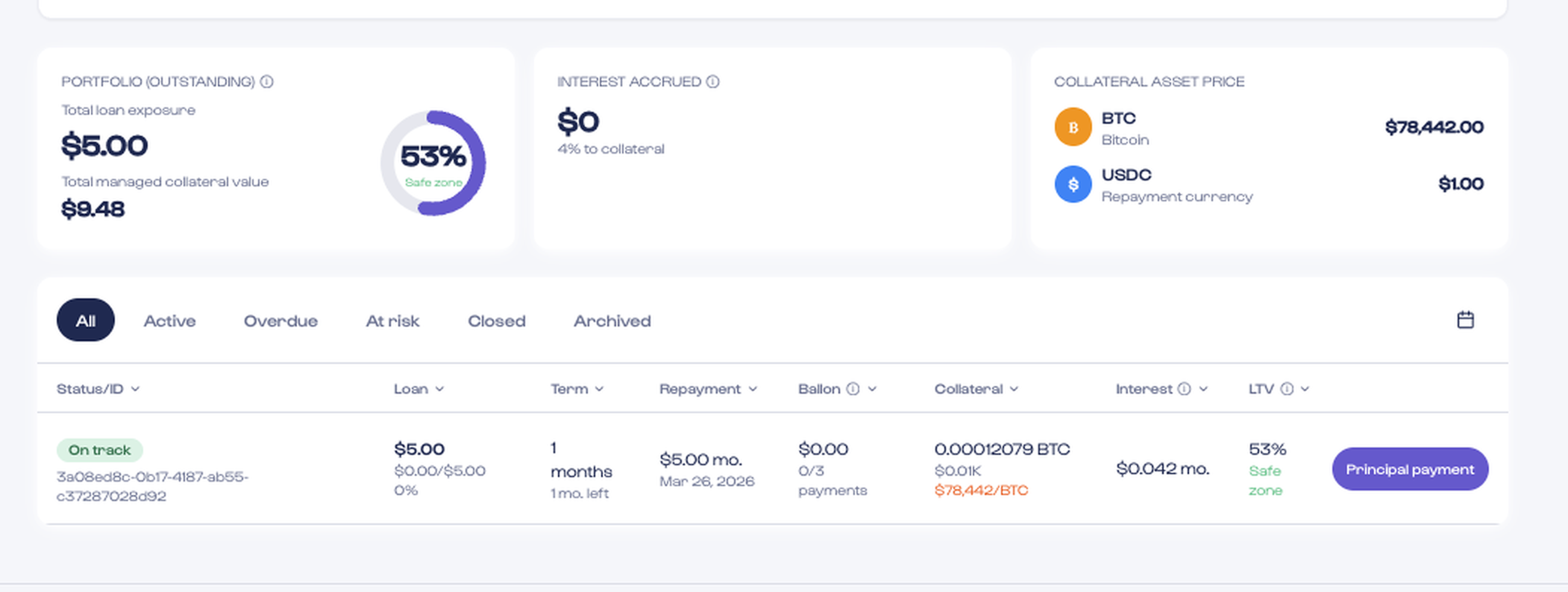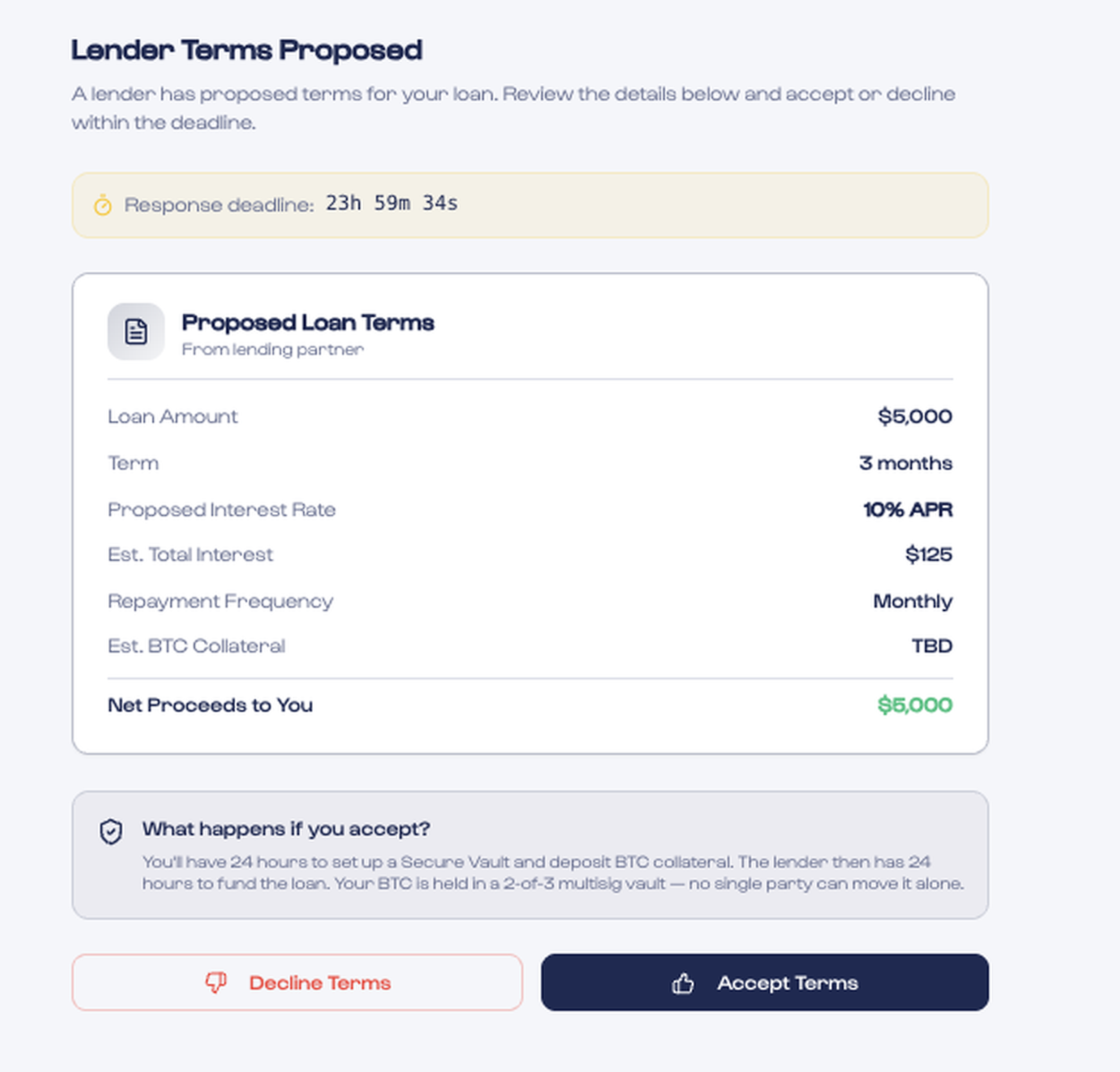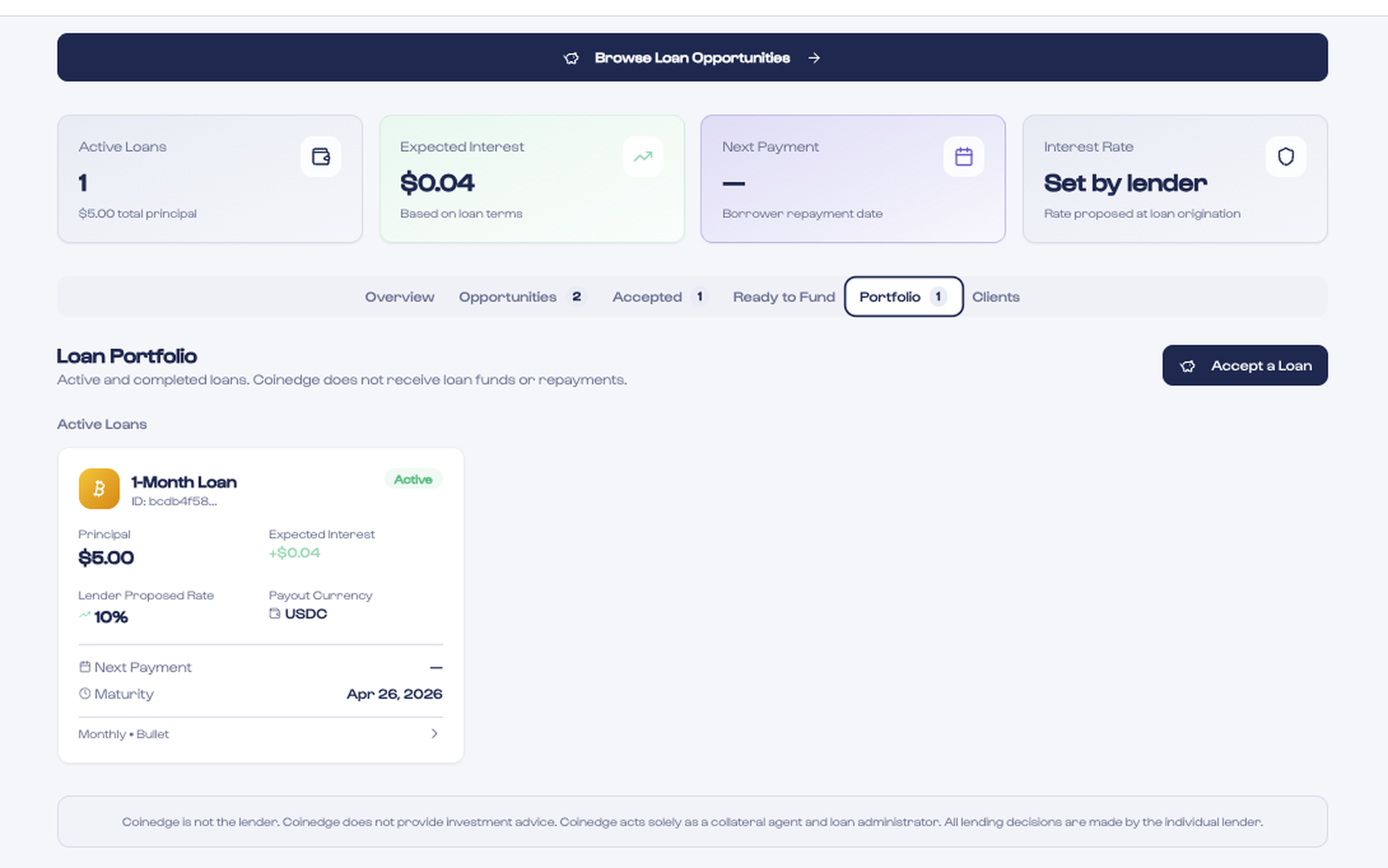
LTV — loan-to-value ratio — is the single most important number in any crypto loan. It determines how much you can borrow, how much buffer protects you against price swings, and how close you are to liquidation. If you understand LTV, you understand the core risk of borrowing against Bitcoin.
How to calculate LTV
LTV is your loan amount divided by the current value of your collateral, expressed as a percentage. The formula is simple:
The LTV formula
LTV = (Loan amount ÷ Collateral value) × 100. Example: a $6,000 USDC loan backed by $10,000 of Bitcoin is a 60% LTV.
A lower LTV means a bigger safety buffer and lower risk. A higher LTV means you are borrowing more against the same collateral, leaving less room for the price to fall before your loan is at risk.
Why your LTV changes constantly
Here is the part that catches new borrowers off guard: your LTV is not fixed. The loan amount stays the same, but the collateral value moves with Bitcoin's price every second. When BTC rises, your collateral is worth more and your LTV falls — your loan gets safer. When BTC falls, your collateral is worth less and your LTV rises — your loan gets riskier.
- Start: $6,000 loan against $10,000 BTC = 60% LTV.
- BTC rises 25% → collateral worth $12,500 → LTV drops to 48% (safer).
- BTC falls 25% → collateral worth $7,500 → LTV climbs to 80% (riskier).
Liquidation and margin thresholds
Every loan has a pre-agreed LTV threshold. If a price drop pushes your LTV toward that line, you will be alerted and asked to act — typically by adding more BTC collateral or making an early partial repayment to bring your LTV back down. If LTV breaches the liquidation threshold and no action is taken, collateral is liquidated per the terms agreed at origination to repay the lender.
How to stay in the safe zone
Borrow at a conservative LTV (well below the maximum), keep some spare BTC ready to top up, and watch your portfolio dashboard. A lower starting LTV buys you a much bigger price cushion.
Choosing the right LTV for you
A higher LTV gets you more cash now but leaves a thin margin — a modest price drop can put you at risk. A lower LTV is more conservative and far more comfortable to hold through volatility. Many borrowers target a starting LTV in the 30–50% range so a sharp Bitcoin correction does not immediately threaten the loan.
Now that you understand LTV, see the full process in How to Borrow Against Your Bitcoin, or create a request on the borrow page. Lenders can read about managing collateral risk on the lend page.