When you take a crypto loan, one question matters more than the interest rate, the term, or the platform's branding: who controls your Bitcoin while the loan is active? The answer comes down to one word — custodial or non-custodial. Getting this wrong is exactly what cost customers their coins in 2022. Getting it right is the foundation of safe borrowing.
What is a custodial crypto loan?
In a custodial model, you hand your Bitcoin to the lender, who holds it in their own wallet for the life of the loan. You are trusting that company to keep it safe, not re-lend it, and give it back when you repay. The problem is that you no longer control the asset — if the company becomes insolvent, freezes withdrawals, or misuses the collateral, your coins are at risk. The 2022 failures of BlockFi, Celsius, and Voyager were all custodial: when they collapsed, customer coins were trapped in bankruptcy.
What is a non-custodial crypto loan?
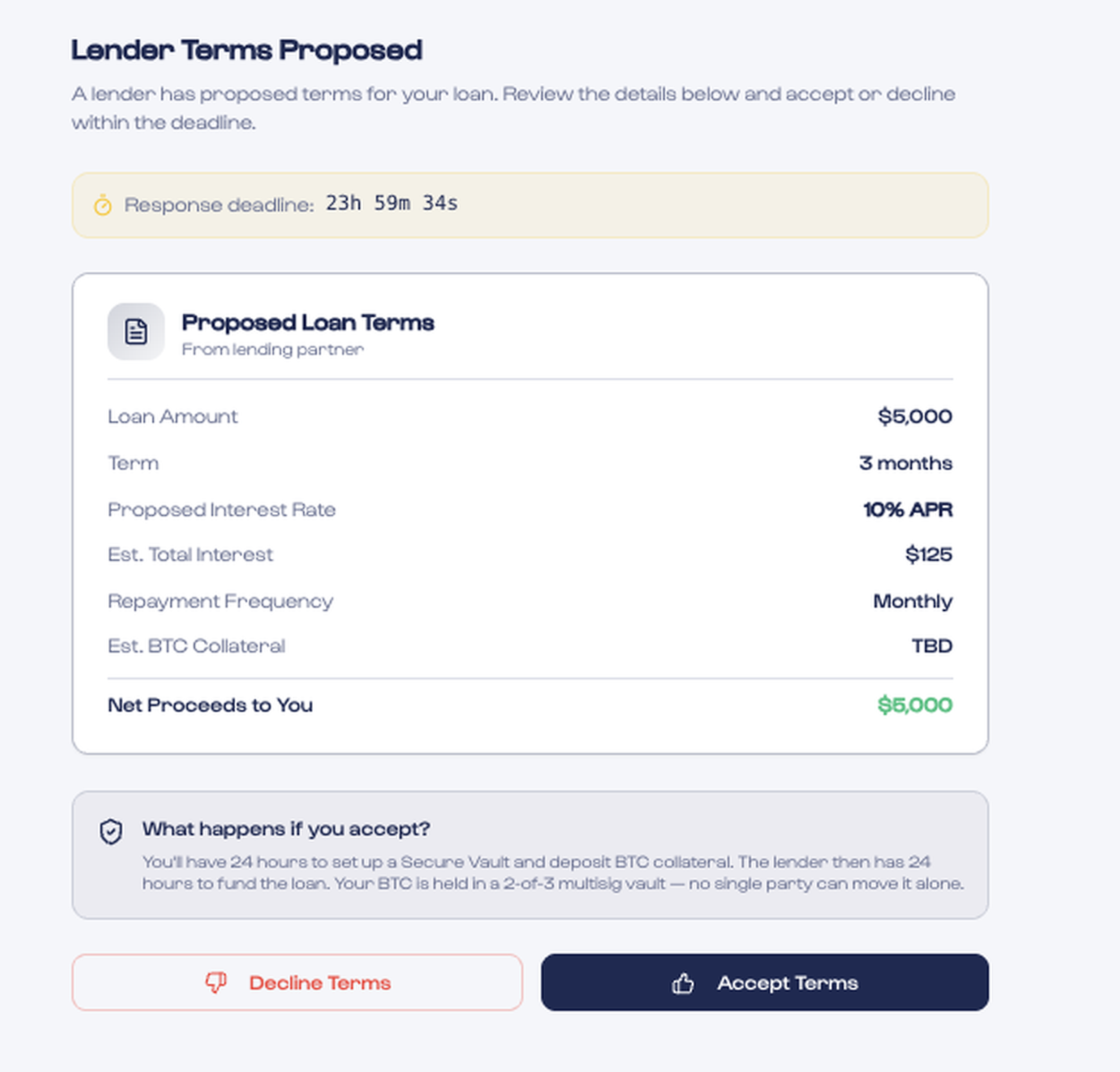
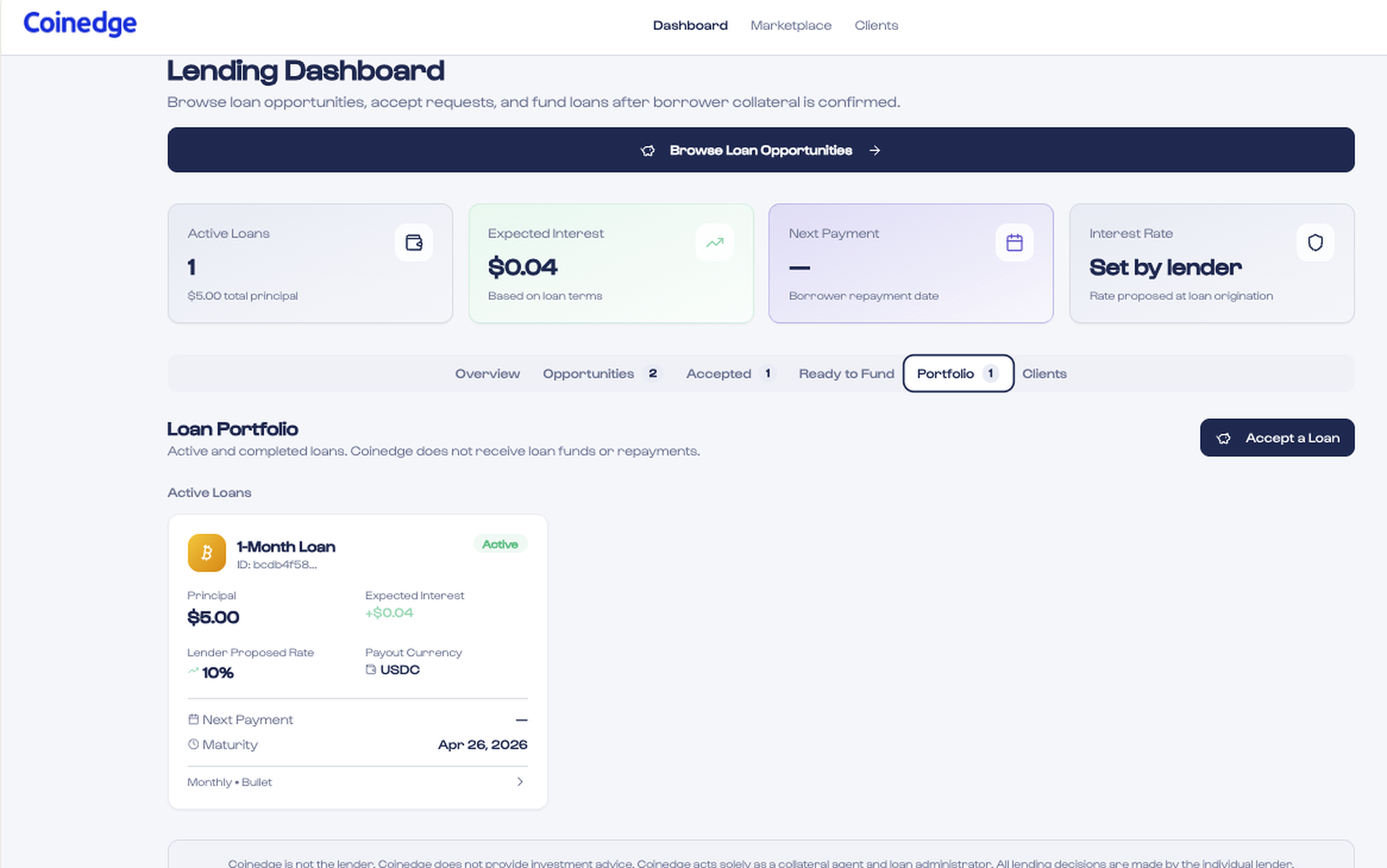
In a non-custodial model, no single party ever controls your Bitcoin. Coinedge uses a 3-key multisig vault: the borrower, the lender, and Coinedge each hold one key, and any movement of funds requires multiple signatures. The collateral cannot be re-lent or rehypothecated, and no one — including Coinedge — can move it unilaterally. You can verify the collateral on-chain at any time. Read the full breakdown in 3-Key Multisig Explained.
| Custodial | Non-custodial (Coinedge) | |
|---|---|---|
| Who holds your BTC | The lender's wallet | 3-key multisig — no single party |
| Can collateral be re-lent? | Often yes | No |
| Counterparty / solvency risk | High | Removed for custody |
| On-chain verifiable | Usually no | Yes |
| What happens if platform fails | Coins may be trapped | No one can move BTC alone |
Why this is the most important choice you make
Interest rates and terms matter, but they are recoverable mistakes. Losing your collateral because a custodian failed is not. Choosing a non-custodial platform removes the single biggest structural risk in crypto lending — counterparty custody risk — and lets you borrow with confidence. Learn more about the security model on the security page.
If you want to borrow without giving up control of your Bitcoin, start on the borrow page. If you want to fund loans as a lender, see how lending works.