If you are shopping for a Bitcoin-backed loan, Ledn is probably on your shortlist — it is one of the best-known names in crypto lending. Coinedge takes a fundamentally different approach to the same problem. This is an honest, side-by-side comparison of how the two work, who controls your collateral, who sets your rate, and which model fits which kind of borrower.
The one-line difference
Ledn is a custodial lender: you send it your Bitcoin and it lends you cash. Coinedge is a non-custodial marketplace: your Bitcoin sits in a 3-key multisig vault no single party controls, and independent lenders compete to fund your loan.
Side-by-side comparison
| Coinedge | Ledn | |
|---|---|---|
| Custody model | Non-custodial — 3-key multisig vault | Custodial — Ledn holds your BTC |
| Who controls collateral | No single party (borrower + lender + Coinedge keys) | The platform |
| Who sets the rate | Independent lenders compete to propose rates | Platform-set rate |
| Collateral re-lent / rehypothecated | Never — locked in vault | Depends on product tier and terms |
| Loan funds flow | Peer-to-peer, lender → borrower (USDC) | From the platform's balance sheet |
| Counterparty risk | Removed — no pool of customer BTC to misuse | Exposed to platform solvency |
| On-chain verifiability | Collateral deposits and releases are public | Internal ledger |
Custody: the question that matters most
When you take a loan with a custodial lender, you transfer your Bitcoin to the company. From that moment, you are trusting it to safeguard your coins, not re-lend them recklessly, and stay solvent long enough to return them. The 2022 failures of BlockFi, Celsius, and Voyager were all custodial — when they collapsed, customers' coins were frozen in bankruptcy. That is not a knock on any specific surviving lender, but it is the structural risk every custodial model carries.
Coinedge removes that risk by design. Your collateral goes into a 3-of-3 multisig vault where you, the lender, and Coinedge each hold one key — all three signatures are required to move funds. No one can re-lend or seize your Bitcoin unilaterally. We break down the architecture in 3-Key Multisig Explained, and the broader model in What Is Crypto Lending?.
Who sets your interest rate
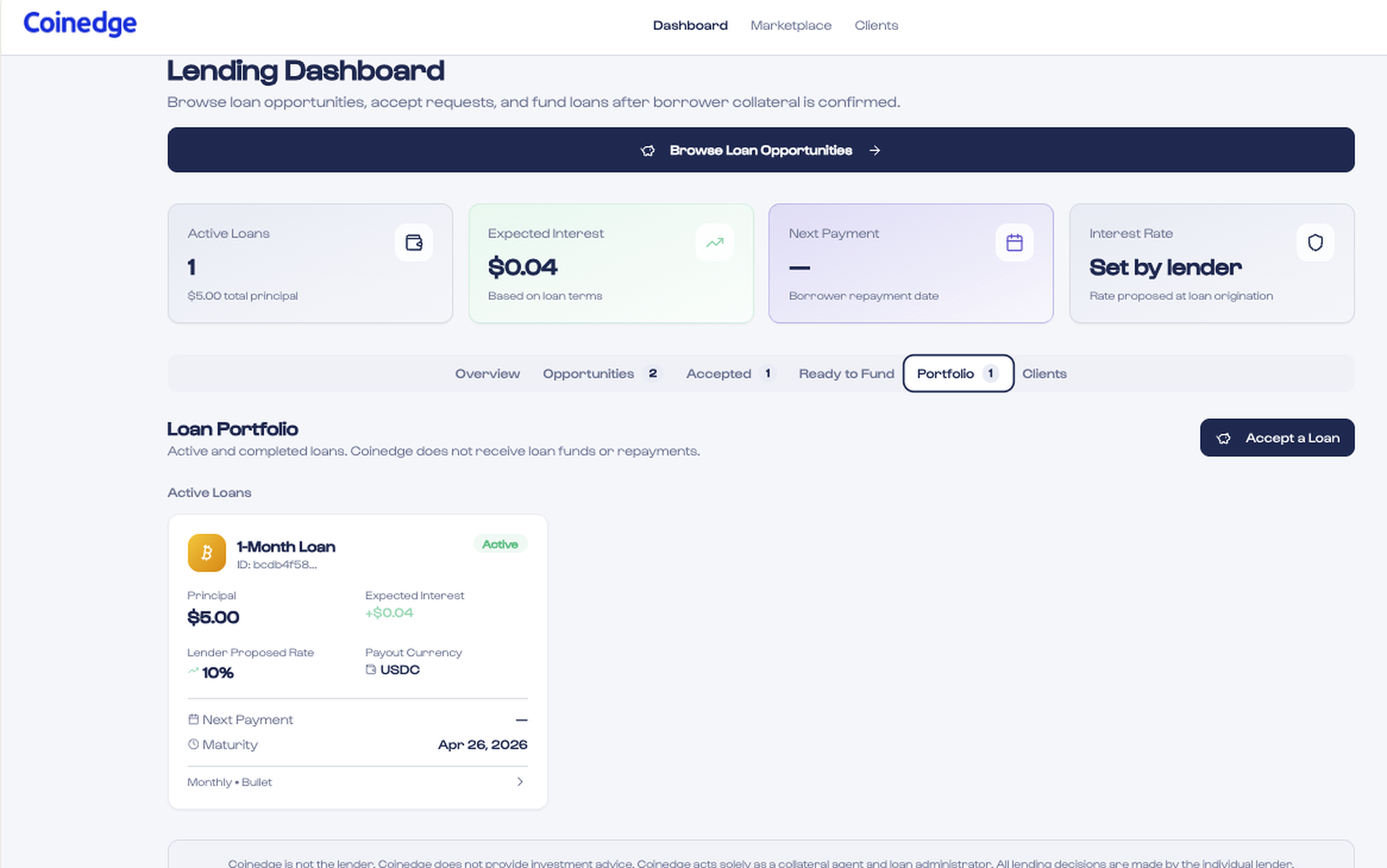
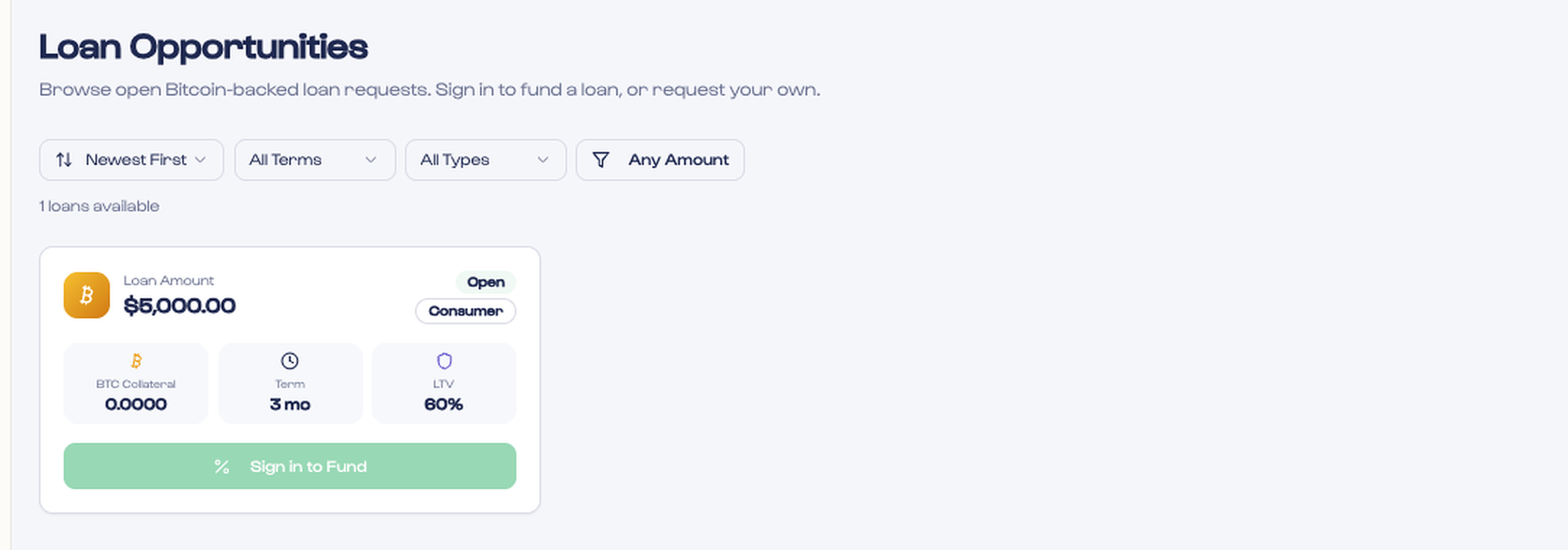
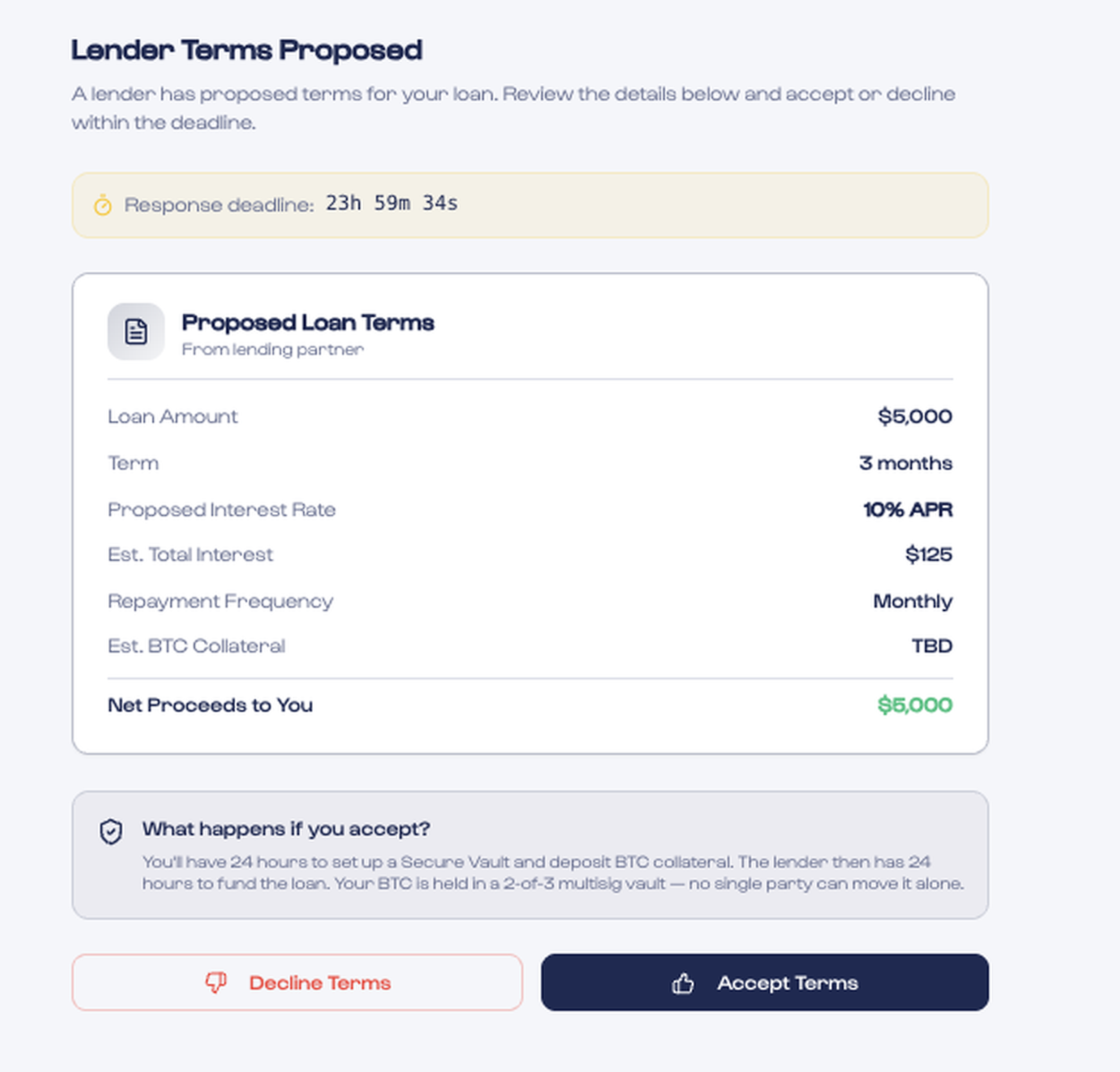
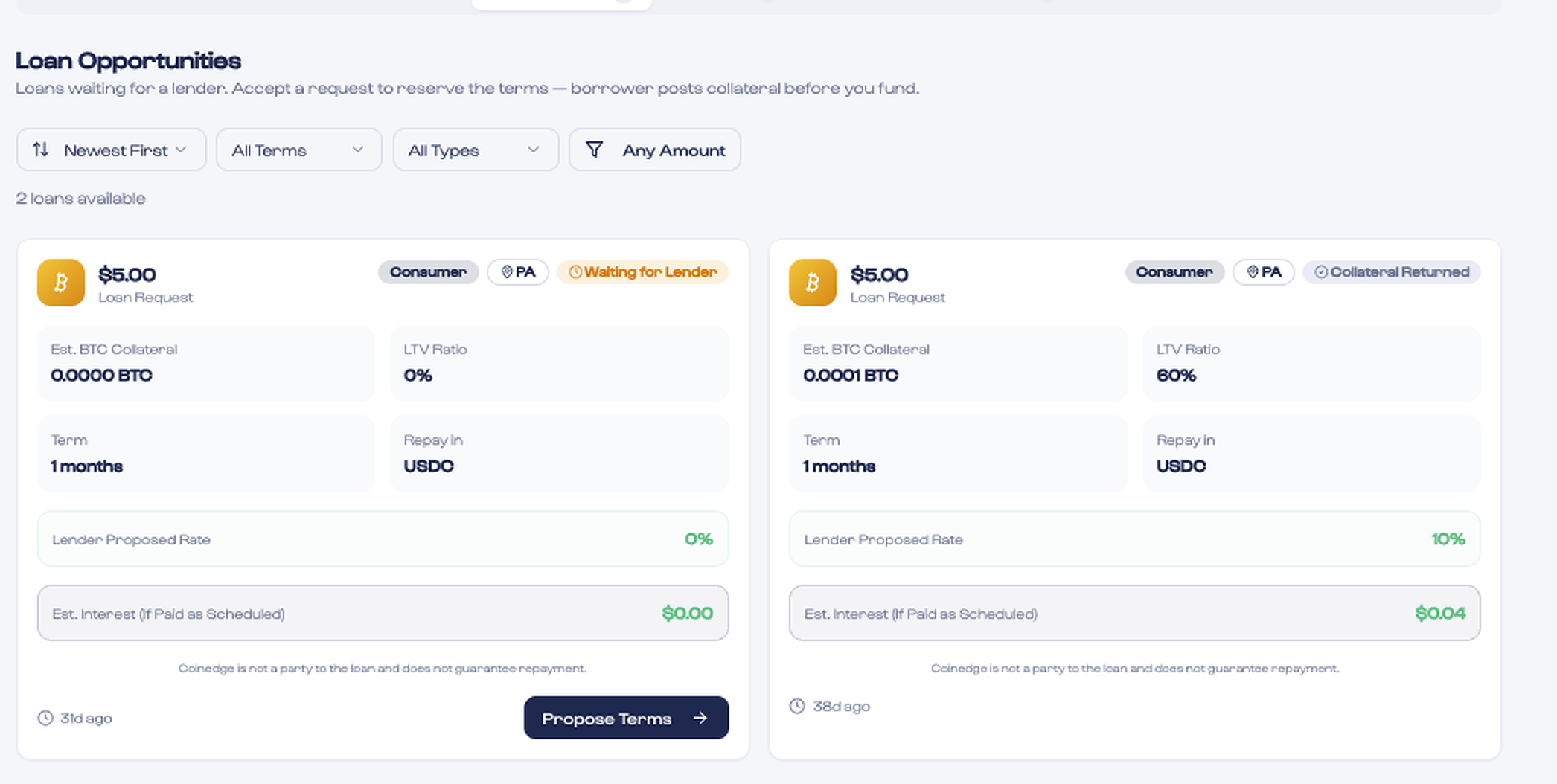
With a balance-sheet lender, the platform sets one rate and you take it or leave it. Coinedge is a marketplace: you submit a request, and independent lenders propose competing rates for your business. You choose the best offer. That competition is what keeps borrowing costs honest rather than dictated. See the full flow in How to Borrow Against Your Bitcoin.
Which should you choose?
- Choose a custodial lender like Ledn if you prioritize a long-established brand and are comfortable handing over custody of your BTC for the duration of the loan.
- Choose Coinedge if eliminating counterparty custody risk is your priority — your collateral never leaves a vault no single party controls — and you want lenders competing on rate.
Ready to compare for yourself? Start a request on the borrow page — there is no credit check and no obligation to accept any proposal. If you have capital to deploy, see how lending works.